Solving for MSMEs with M365
Research-led UX strategy at Microsoft IDC—mapping how Indian MSMEs actually run on WhatsApp, ledgers, and human glue, then shaping M365 directions that integrate without importing enterprise complexity.
Context
Data + research: what it means to design for this context.
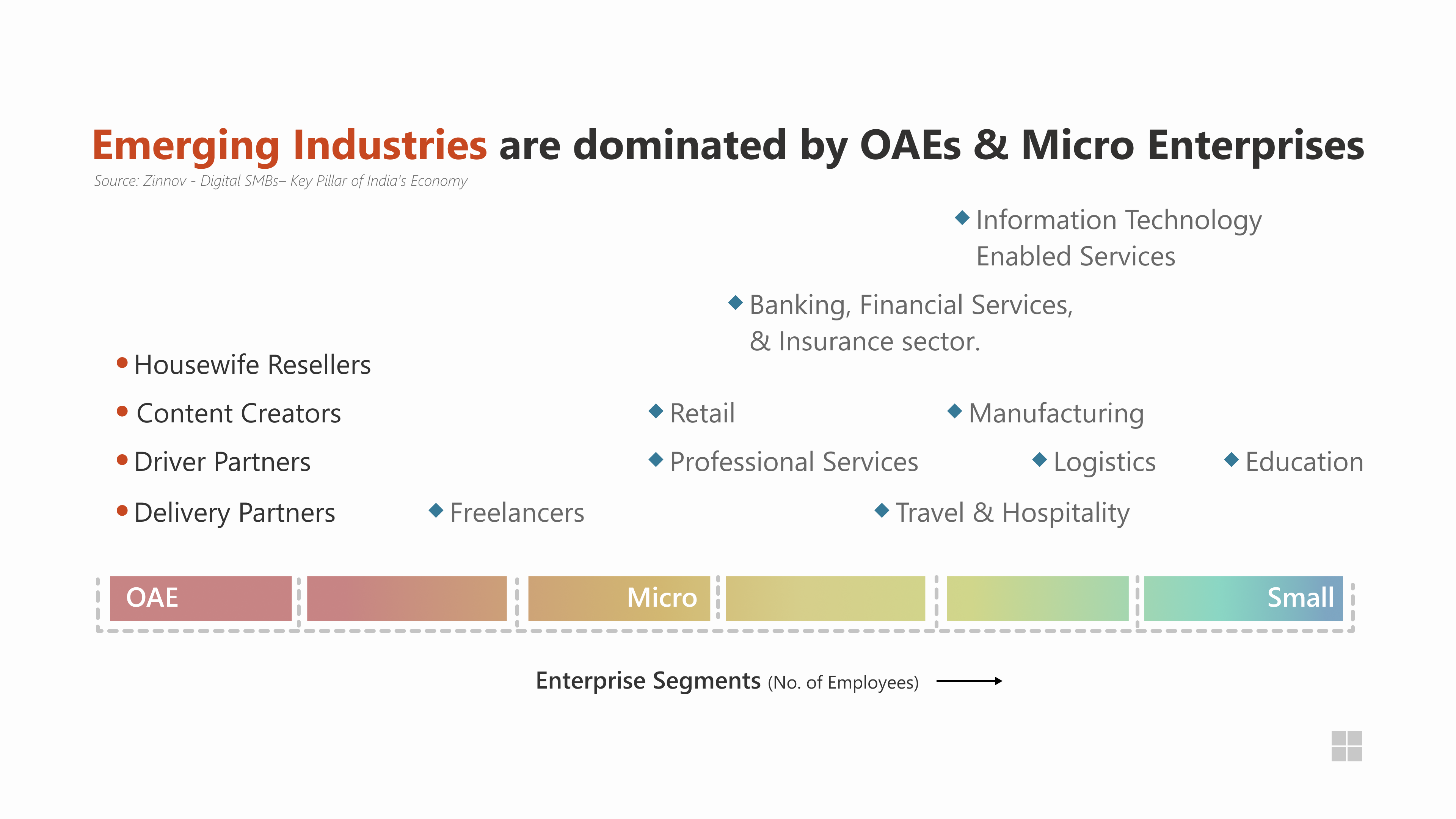
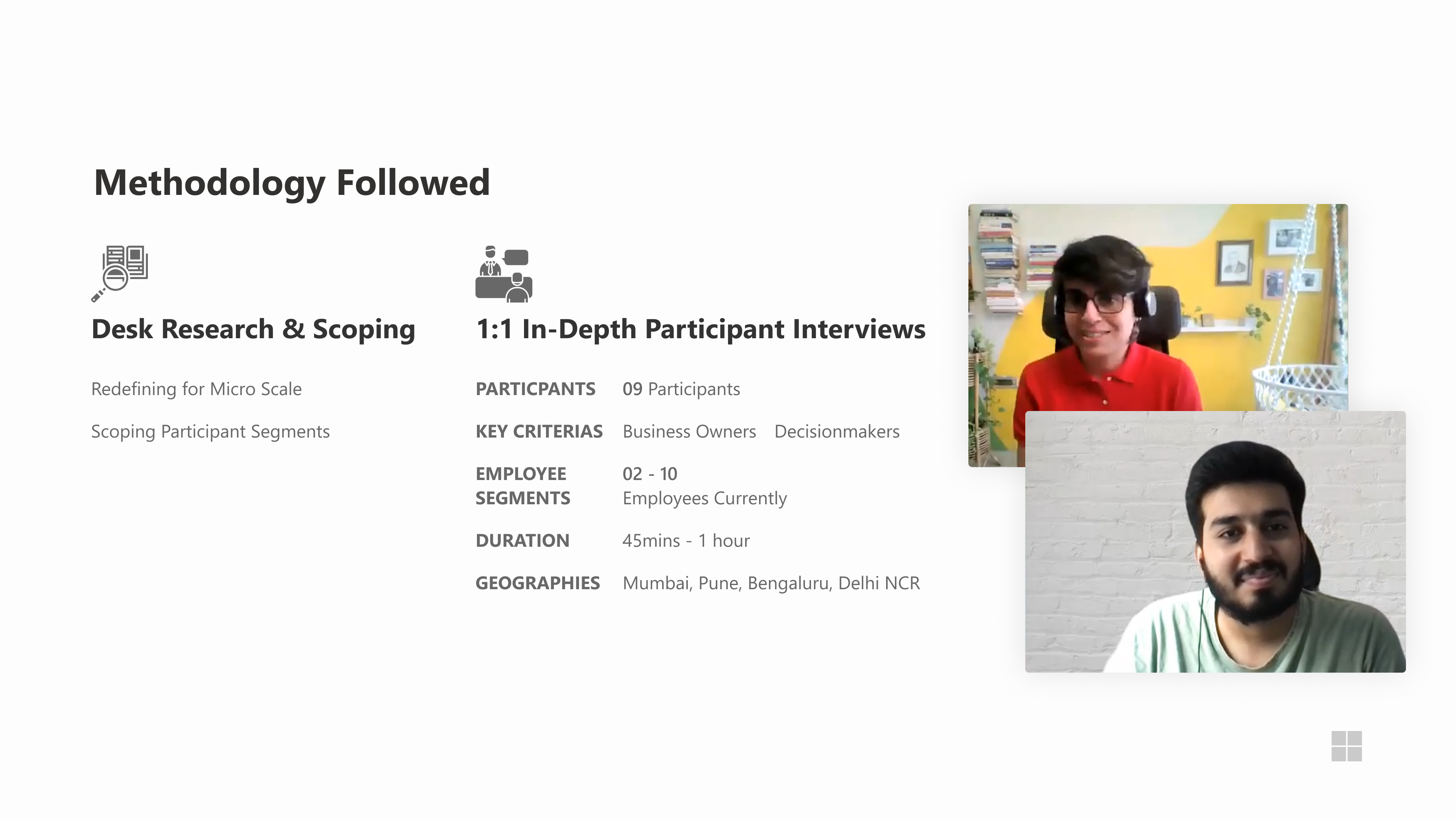
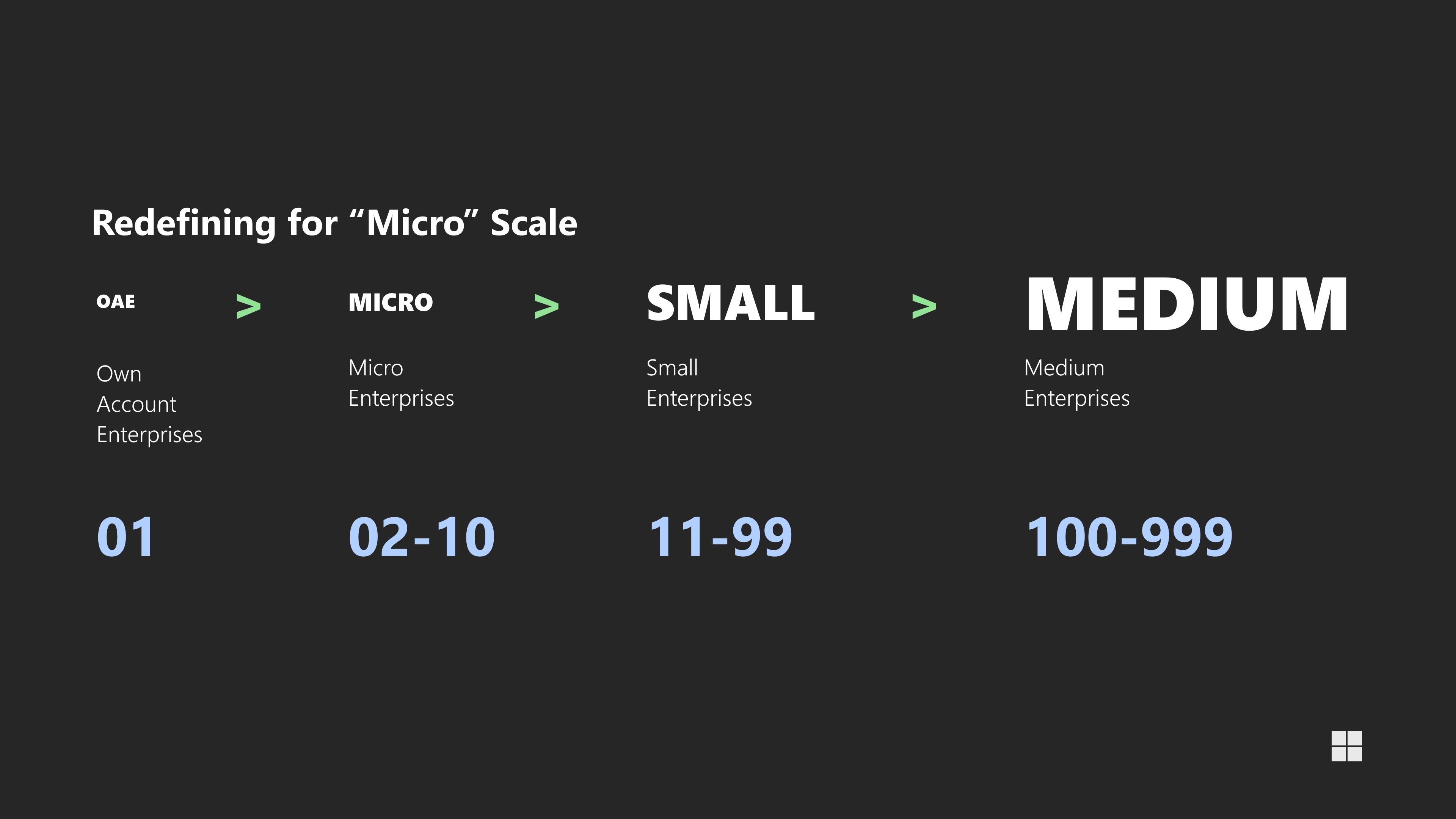
The official definition of MSMEs in government records spans a vast band—from larger small businesses down into the very large unorganized economy. The harder question is how to sense that field without flattening it: where to look, how to categorize it responsibly, and what “manage and communicate” means in extremely specific, messy day-to-day contexts.
We started from definitions of small and very small businesses—but definitions rarely match lived operations.
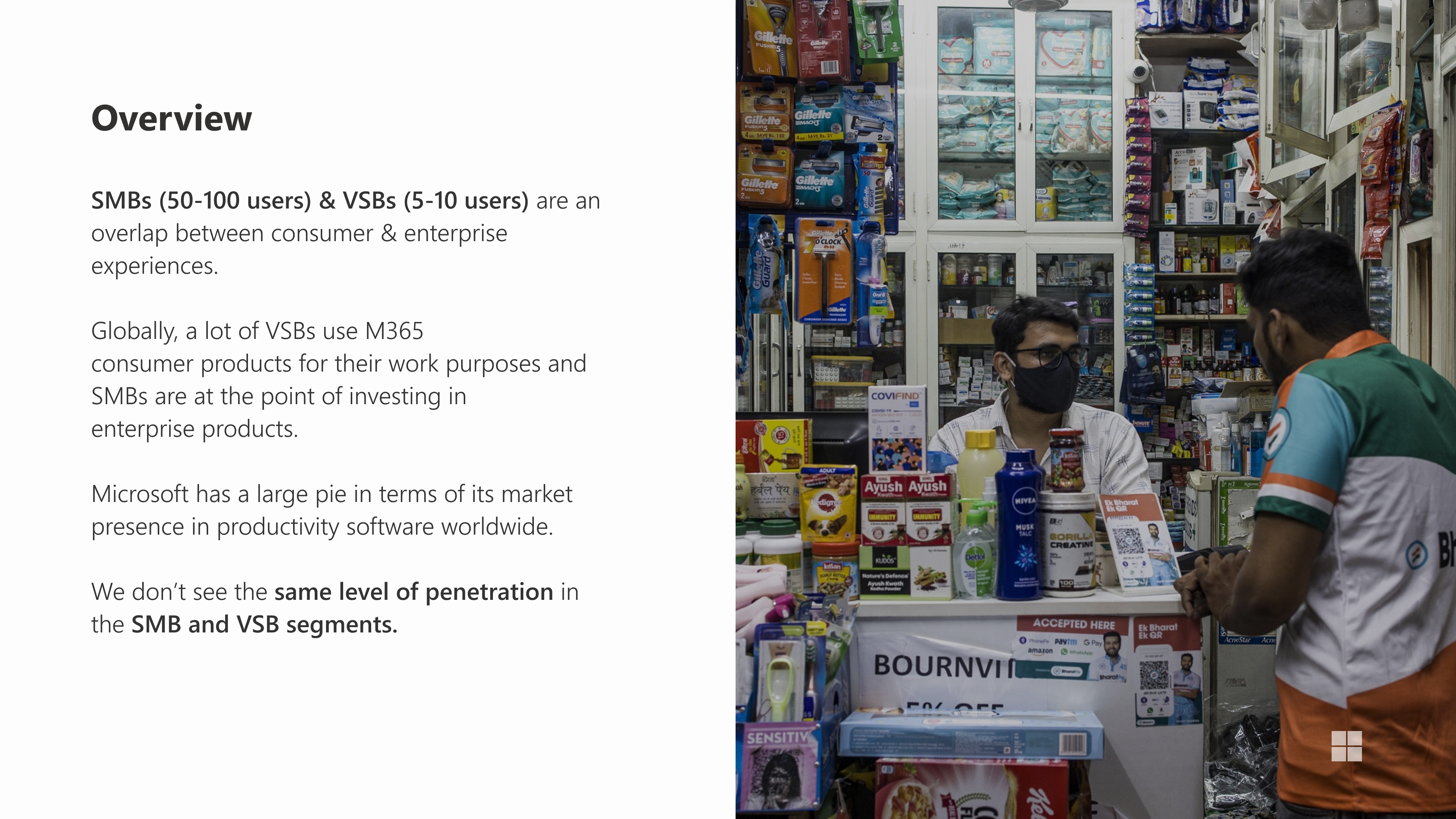
Making sense of the unorganized sector
To make sense of the unorganized MSME slice, we mapped an end-to-end operational journey of a local coffee distributor and used it to highlight critical friction points:
- Procurement & needs: Coordinating with suppliers through fragmented WhatsApp threads creates chaos and no durable, centralized record. A trace exists, but it is different in every conversation. There is little standardized tooling (SAP/ERP-class systems) woven into daily rituals the way these businesses actually work.
- Inventory management: Tracking incoming raw beans across battered notebooks and disjointed spreadsheets produces analog bottlenecks. Integrations exist, but there is no single opinionated way to run inventory across so many surfaces. SaaS point solutions exist, yet they often sit outside the daily workflow—or cost too much. Why force ClickUp-grade end-to-end orchestration when people are already the glue bridging tools, surfaces, and contexts?
- Ordering & dispatch: Manually assigning drivers on rushed orders—with weak visibility between sales and the warehouse—creates a speed-to-fulfillment gap.
- Delivery & payment: Relying on wallet screenshots for payment confirmation feeds a shadow reconciliation loop: high error rates and painful manual tallying.
- Post-service: Disputes force teams to reconstruct history from unstructured chat archaeology.
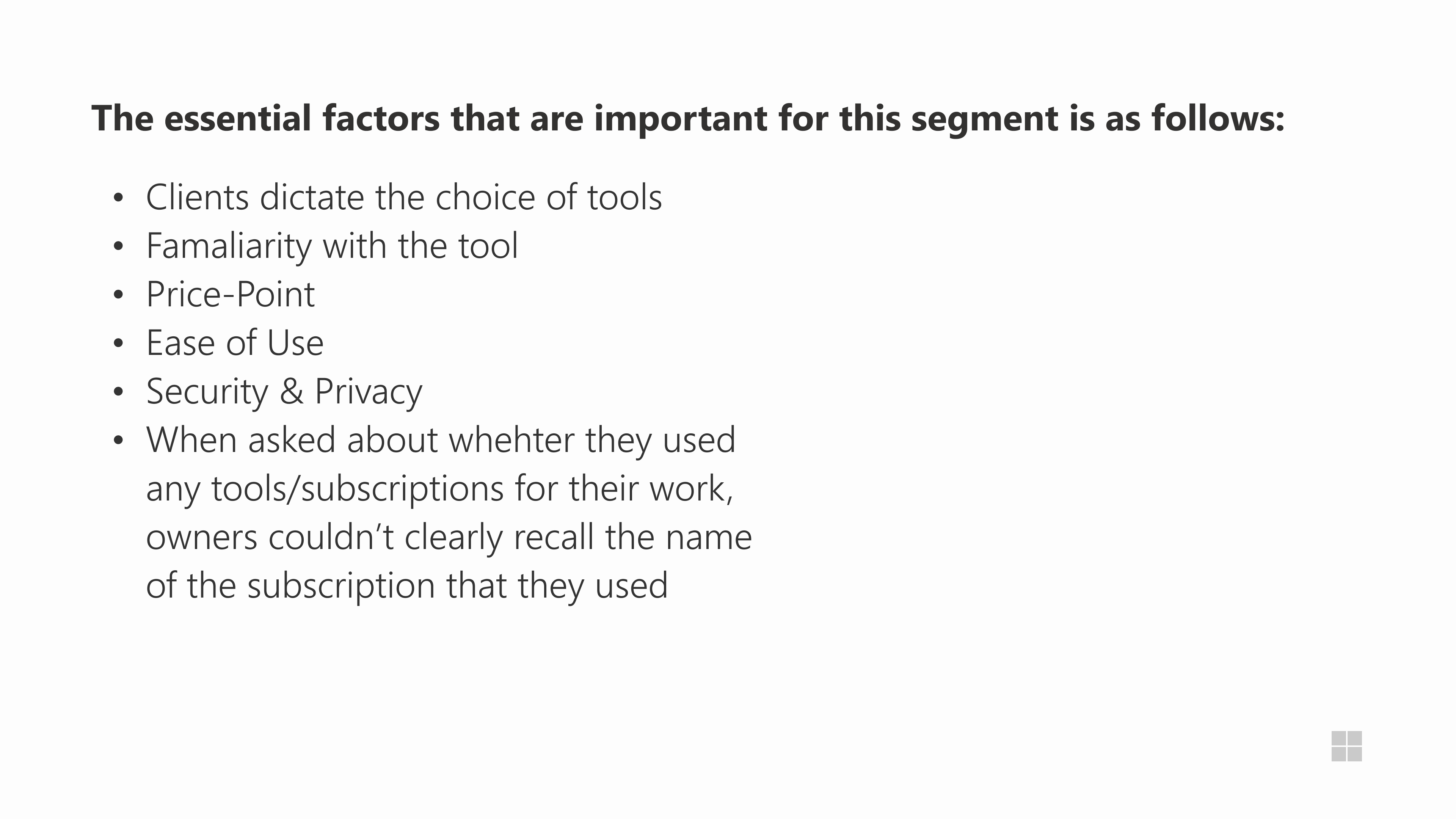
That exercise made the overarching issue explicit: it is usually not a lack of tools, but a severe lack of integration across the daily workflow.
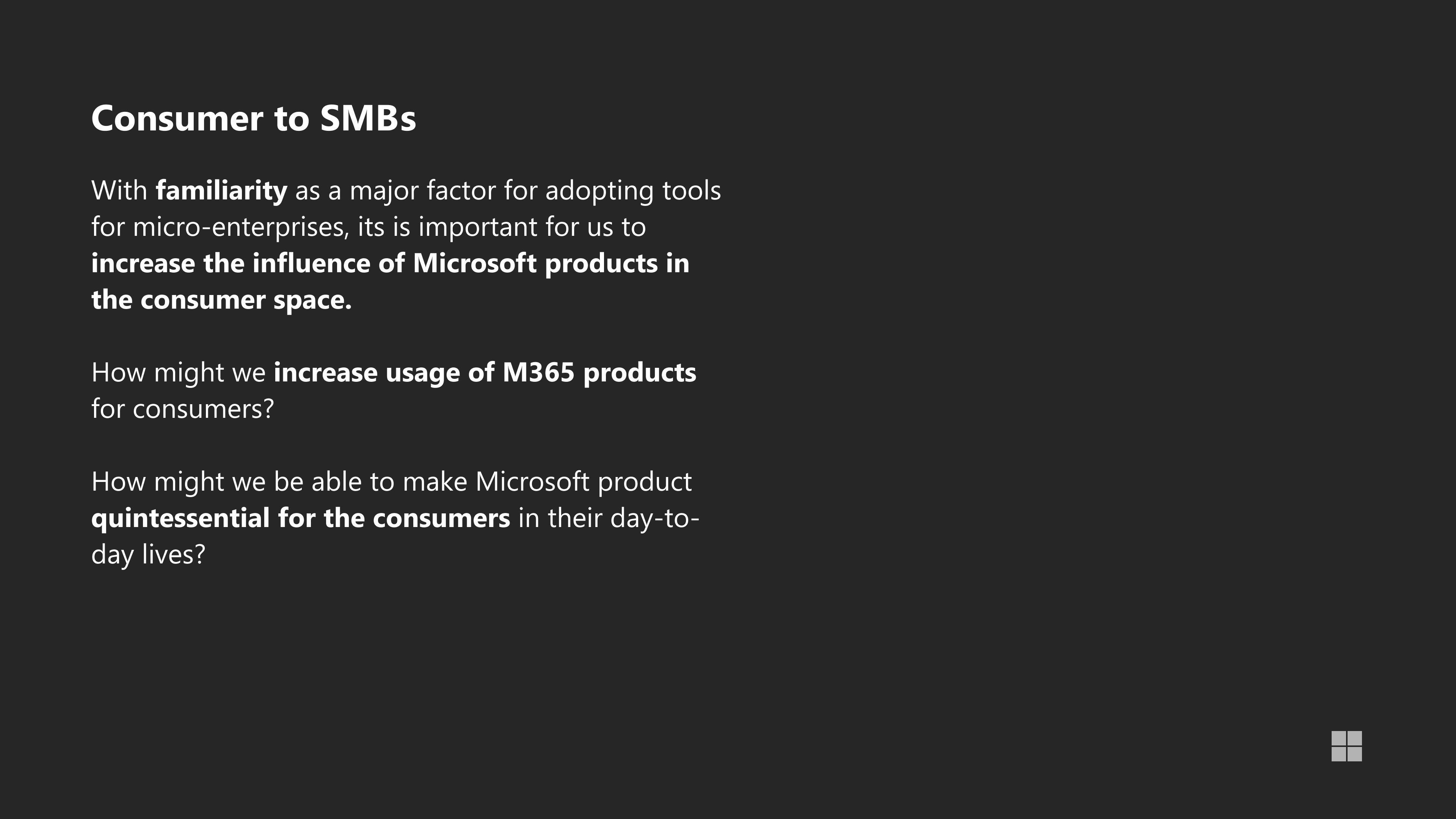
Small and medium enterprises are the backbone of the economy, yet digital transformation often misfires for them. This work focused on reimagining core collaboration and productivity patterns inside Microsoft 365 so they could meet this segment’s constraints—not a shrunken enterprise fantasy.
The challenge
Fragmented digital toolkits
MSME owners and employees often juggle consumer-grade apps to run the business. The product challenge was to integrate those rhythms into a professional, scalable suite without spiking complexity.
- The “human glue” burden: Without a single opinionated system, people become the manual bridge—moving data between chat apps and analog notebooks.
- Complexity vs. context: Many end-to-end SaaS systems (ERPs, “do everything” ops suites) are over-engineered and cost-prohibitive. They ignore MSME reality: quick, localized, interrupt-driven interactions.
- Lack of standardization: Vendor and client interactions follow inconsistent protocols. The design problem is introducing scalable structure without forcing clunky enterprise paradigms onto six-person operations.
- Fragmented toolkits: The mission was to unify scattered processes into something M365-shaped—without increasing cognitive load.
It feels like I spend half my day just playing catch-up between WhatsApp messages, my ledger, and phone calls. If I don’t constantly move the information myself, the entire business stops.
The solution
We developed a streamlined narrative for how M365-class experiences could reduce daily chaos without pretending every MSME will adopt a full ERP. Highlights of the proposed ecosystem direction:
1. Templatizing day-to-day expansion
How might we templatize essential day-to-day tasks so owners can expand capacity without re-learning a new system every week?
To reduce cognitive load, we explored task patterns that proactively surface what needs to happen on a regular cadence—closer to “gentle operating rhythm” than a blank suite.
Scenario: A café owner receives orders, payment confirmations, and delivery updates scattered across WhatsApp, calls, and memory—no single system, only fragmented signals they mentally stitch together. Each message carries implicit business intent (order, payment, follow-up), but it stays unstructured, forcing the owner to manually translate chat into action.
2. Everything in one view
How do we clear the clutter?
Instead of jumping between WhatsApp, phone calls, and scribbled notes, the direction was a single operational view: what is paid, what is out for delivery, what is late—less mental stitching, fewer missed handoffs.
- Track orders without digging through chats
- See payments clearly so nobody gets dropped
- Run the day from one primary surface
3. From hustle to flow
The system should learn how the team works and progressively take on repeatable chores—chasing late payments, checking stock signals—so the business moves from daily scramble toward managed flow, freeing attention for decisions that actually require a human.